

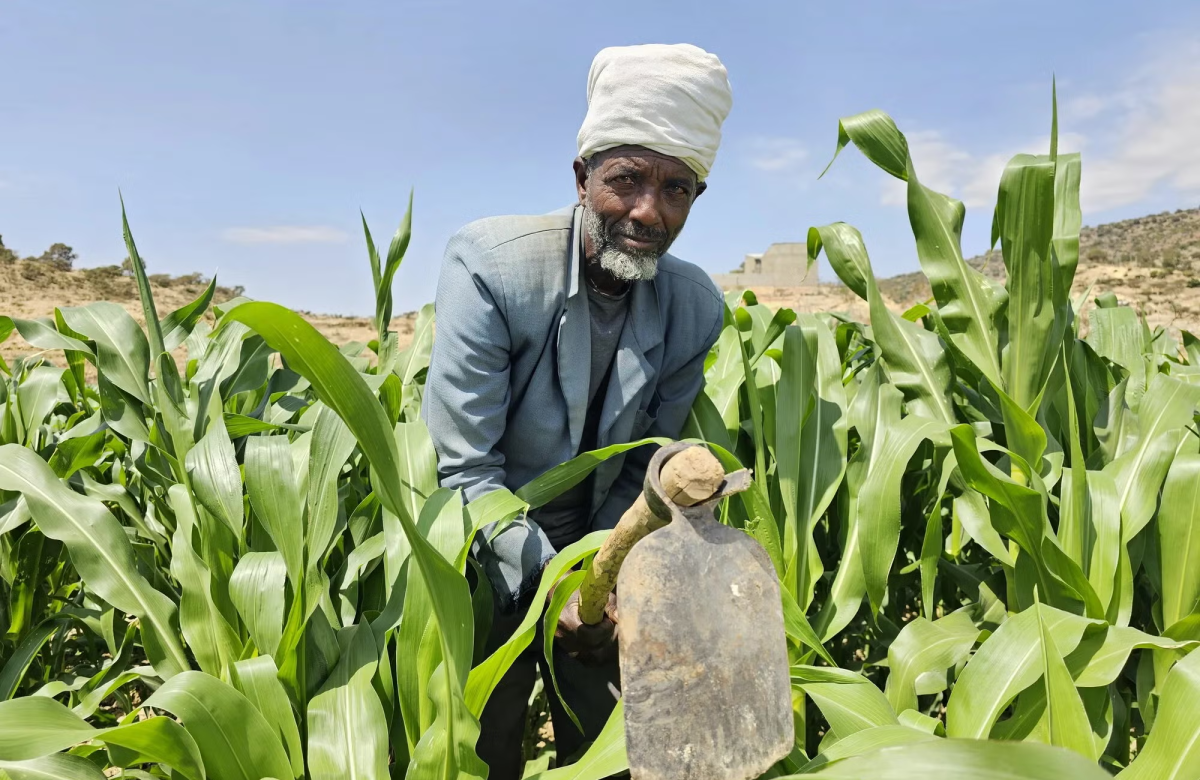
The Role of Irrigation Facilities in Sustaining Food Self-Sufficiency
In the current economic climate of East Africa, the transition from rain-fed dependence to engineered agricultural stability is a cornerstone of national security. As a leading Category One firm, TAHB Engineering & Consultants recognizes that the path to food self-sufficiency is built upon two pillars, the strategic foresight of Basin Studies and the rigorous execution of Irrigation Infrastructure.
I. The Foundational Phase: Importance and Challenges of Basin Study
Before a single canal is excavated, the technical viability of a project must be established through a comprehensive Basin Study. This foundational phase is instrumental in ensuring that capital investment aligns with hydrological reality.
● Strategic Resource Allocation: A Basin Study provides the holistic data required to balance competing water needs agriculture, energy, and industry ensuring that irrigation schemes are sustainable for decades, not just seasons.
● The Technical Challenges: Managing water resources in diverse terrains presents significant hurdles, primarily Data Scarcity and Climate Variability. Accessing precise, long-term hydrological data remains a complex task. Furthermore, designing for Climate-Smart outcomes requires advanced modeling to account for increasingly frequent extreme weather events.
● Integrated Management: Effectively navigating transboundary complexities and sedimentation risks requires a level of “Technical Guardianship” that TAHB provides, ensuring that upstream interventions do not compromise downstream potential.
II. Engineering the Engines of Growth: Irrigation Facilities
Once the basin’s potential is mapped, the focus shifts to the projects at hand the design and supervision of modern irrigation facilities that serve as the engines of food self-sufficiency.
● Climate-Smart Agriculture (CSA): TAHB prioritizes CSA to maximize water conservation. By deploying modern, water-saving techniques, we help our partners (such as the WFP) achieve measurable increases in efficiency, ensuring that water, our most precious resource, reaches the field with minimal loss.
● Year-Round Productivity: Through the engineering of robust intake structures, pumping stations, and distribution networks, we enable farmers to move to double-cropping cycles. This consistency is the only way to insulate the national food supply from the shocks of drought.
III. Proactive Management and Standard and Code Compliance
The difference between a failed project and a sustainable one lies in Rigorous Site Supervision. At TAHB, our full-time, on-site teams perform continuous verification of:
1. Material Integrity: Ensuring that material quality complies with acceptable national and international standards like ASTM, BS, EBCS, etc
2. Workmanship Standards Adherence: Ensuring that workmanship quality complies with acceptable national and international standards like ASTM, BS, EBCS,to ensure infrastructure longevity.
3. Contract Administration: By managing communication flows and providing expert claim prevention, we ensure project certainty and financial stability for our clients.
From the initial complexities of a prospective Basin Study to the construction supervision of critical Irrigation Facilities, TAHB Engineering & Consultants acts as a dedicated guardian of quality in engineering infrastructure. By merging design innovation with proactive oversight, we are not just building canals; we are securing the future of our nation’s food supply.
Explore our technical portfolio and services at tahbconsultants.com.


